
Crude Oil Prices: Understanding the Global Energy Market


Crude oil is one of the most important commodities in the global economy. It fuels transportation, powers industries, and plays a critical role in shaping economic growth. Because of its importance, crude oil prices are closely monitored by governments, businesses, investors, and consumers around the world. Changes in oil prices can influence inflation, transportation costs, energy policies, and even geopolitical decisions.
Crude oil prices are determined by a complex interaction of supply and demand, geopolitical tensions, economic growth, and market speculation. These factors often cause prices to fluctuate dramatically over time. Understanding how crude oil prices work can help individuals and businesses better grasp global economic trends and anticipate changes in the energy market.
What is Crude Oil?
Crude oil is a naturally occurring fossil fuel found beneath the Earth’s surface. It is formed from the remains of ancient marine organisms that were buried under layers of sediment and exposed to heat and pressure over millions of years. Once extracted from underground reservoirs, crude oil is refined into a variety of petroleum products such as gasoline, diesel, jet fuel, heating oil, and petrochemicals.
The global economy relies heavily on crude oil because it serves as a primary source of energy and raw materials. Even though renewable energy sources are growing in popularity, oil remains one of the most widely used energy resources worldwide.
Global Benchmarks for Oil Prices
Crude oil is traded internationally, and its price is usually measured using benchmark grades. The two most widely recognized benchmarks are West Texas Intermediate (WTI) and Brent crude oil.
WTI is primarily produced in the United States and serves as a key benchmark for North American oil prices. Brent crude, on the other hand, comes from oil fields in the North Sea and is widely used as the global benchmark for oil trading.
These benchmarks help determine the price of crude oil in international markets. For example, the price of oil produced in different countries is often calculated relative to Brent or WTI.
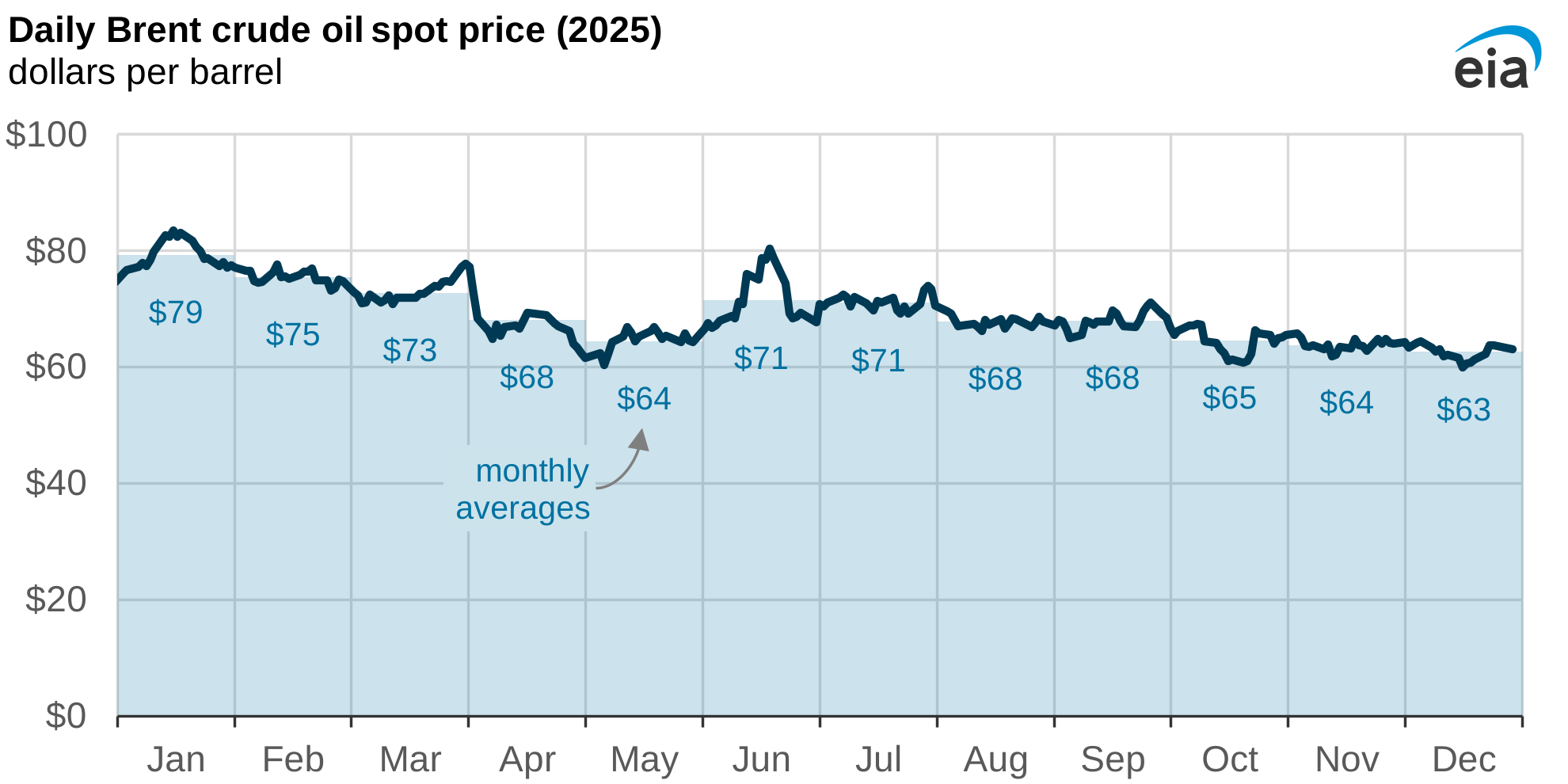
Recent data shows that crude oil prices have experienced fluctuations in recent years. Prices have traded around the mid-$60 per barrel range in some periods, with expectations that they could rise toward $70 per barrel depending on market conditions.
Historical Trends in Crude Oil Prices



Crude oil prices have experienced significant volatility throughout history. During the 1970s, oil prices surged due to geopolitical conflicts and supply restrictions imposed by oil-producing nations. The oil crises of that era highlighted the global economy’s heavy dependence on petroleum.
In the early 2000s, rapid industrial growth in emerging economies such as China and India increased global demand for oil. This rising demand pushed prices upward, reaching historic highs in 2008 before collapsing during the global financial crisis.
More recently, oil markets have experienced fluctuations due to events such as the COVID-19 pandemic, production decisions by major oil-producing countries, and shifts in global energy demand. Supply disruptions and geopolitical tensions can also cause sudden spikes in oil prices.
Key Factors That Influence Crude Oil Prices
Several factors determine how crude oil prices move in the global market. These include supply levels, global demand, political developments, and financial market activity.
1. Supply and Production
Oil supply is one of the most significant factors affecting prices. When production increases, oil becomes more abundant in the market, which can push prices down. Conversely, production cuts or disruptions can lead to higher prices.
Major oil-producing countries and organizations such as the Organization of the Petroleum Exporting Countries (OPEC) often coordinate production levels to influence global supply. Decisions by these producers can have a direct impact on oil prices worldwide.
2. Global Demand
Demand for oil is closely tied to economic activity. When economies grow, industries expand, transportation increases, and energy consumption rises. This leads to greater demand for crude oil and higher prices.
On the other hand, economic slowdowns or recessions can reduce oil consumption. Lower demand usually leads to declining prices in the oil market.
3. Geopolitical Events
Political instability in oil-producing regions can disrupt supply and create uncertainty in the market. Conflicts, sanctions, and trade disputes often influence oil prices.
For example, tensions in the Middle East can affect the flow of oil through important shipping routes. Even the possibility of supply disruptions can cause prices to rise quickly.
4. Currency and Financial Markets
Oil is typically traded in U.S. dollars. When the value of the dollar changes, it can influence oil prices. A stronger dollar often makes oil more expensive for countries using other currencies, which can reduce demand.
In addition, investors and traders participate in oil futures markets. Speculation and financial trading can amplify price movements, especially during periods of uncertainty.
The Impact of Crude Oil Prices on the Economy
Changes in crude oil prices can have widespread economic consequences. Because oil is used in transportation, manufacturing, and energy production, its price influences many aspects of daily life.
When oil prices rise, transportation and production costs also increase. This can lead to higher prices for goods and services, contributing to inflation. Consumers may experience higher fuel prices, which can affect household budgets.
On the other hand, lower oil prices can benefit consumers and businesses by reducing fuel and energy costs. However, they may also negatively impact oil-producing countries and companies whose revenues depend on higher oil prices.
The Future of Crude Oil Prices
Looking ahead, crude oil prices will likely continue to experience fluctuations. Several long-term trends are expected to shape the future of the oil market.
One major trend is the global transition toward renewable energy sources. Governments and companies are investing heavily in solar, wind, and electric vehicle technologies to reduce dependence on fossil fuels. While this shift may gradually reduce oil demand in the long term, petroleum will likely remain an important energy source for decades.
Another factor is technological innovation in oil production. Advances in drilling and extraction techniques have made it possible to produce oil from previously inaccessible reserves. These technologies can increase supply and influence future price movements.
Finally, geopolitical developments and global economic growth will continue to play major roles in determining oil prices.